
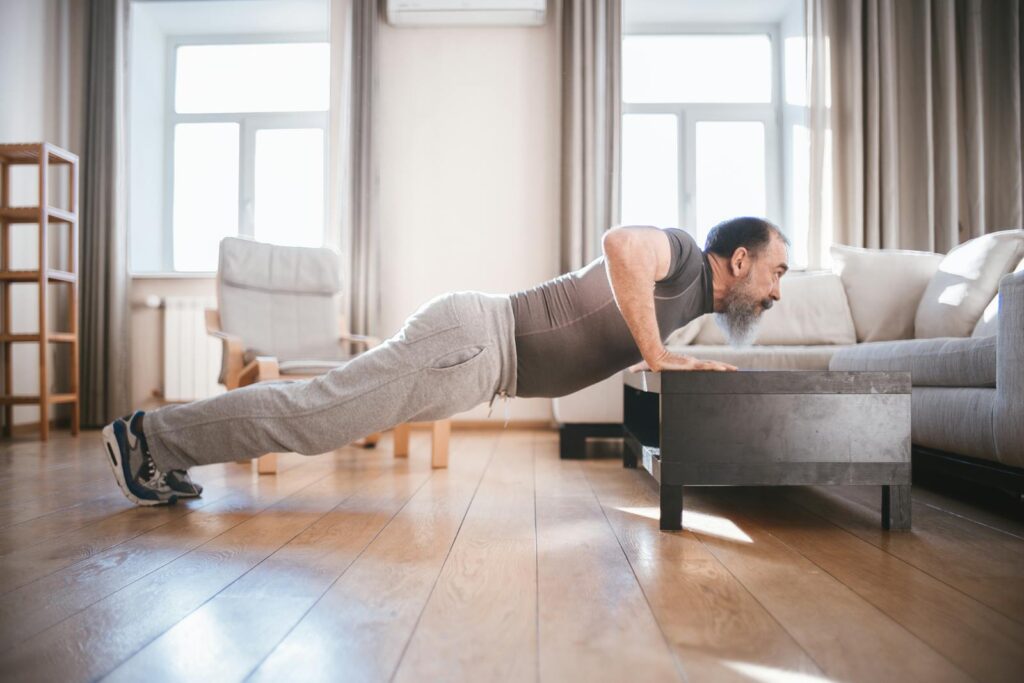
Senior man exercising at home with push-ups on a wooden floor, promoting healthy lifestyle.

Staying Fit Using Bodyweight Exercises Without Equipment

The beauty of using bodyweight exercises to stay fit without equipment lies in their simplicity and accessibility. Every push-up, squat, and plank performed is not just a testament to physical strength but an empowering reminder that your body has everything it needs to thrive. Whether you’re a busy professional, a parent juggling multiple responsibilities, or someone who simply enjoys the convenience of working out at home, these exercises are your ticket to a healthier lifestyle without any barriers.

Statistics reveal that only about 23% of Americans work out regularly, often citing lack of time and resources as primary obstacles. With bodyweight exercises, those excuses fade away, opening a world of possibilities for maintaining fitness. Picture this: you’re on vacation, miles away from the nearest gym, or perhaps caught in a hectic work schedule. Instead of sacrificing your fitness routine, you embrace the power of push-ups, lunges, and burpees right where you are. It’s not just about building strength, it’s about building resilience and adaptability. In this blog post, we’ll explore how you can harness this potential and weave exercise seamlessly into your daily life, regardless of where you find yourself.

Staying Fit Using Bodyweight Exercises Without Equipment Read More »
Detailed close-up of human skin highlighting natural texture and folds.

Exploring Do Obesity and Inactivity Increase the Cancer Recurrence Risk

In the enduring battle against cancer, survivors often find themselves grappling with a lingering question: what can be done to prevent the disease from coming back? As medical advancements continue to enhance our understanding of cancer treatment and recovery, one area gaining significant attention is the impact of lifestyle choices on cancer recurrence. Among these choices, two factors stand out for their widespread prevalence and profound implications: obesity and inactivity. The notion that these could play a role in increasing the risk of cancer making an unwelcome return is not just a topic of scientific inquiry, but a matter of personal urgency for countless individuals.

Consider the reality faced by many cancer survivors who, despite achieving remission, must confront the fear of relapse. This fear is compounded by emerging studies suggesting that carrying excess weight and leading a sedentary lifestyle may indeed increase the risk of cancer’s reappearance. By delving into the complex relationship between these factors and cancer recurrence, this blog post aims to shed light on actionable insights that could empower survivors to make informed choices. Understanding whether obesity and inactivity increase the risk of recurrence after cancer can not only enhance the quality of life for survivors but also offer hope in taking control over their health destinies.

Exploring Do Obesity and Inactivity Increase the Cancer Recurrence Risk Read More »

Close-up of hands gripping an overweight belly, depicting body fat focus.

Do Obesity and Inactivity Increase Cancer Recurrence

When battling cancer, the focus often remains on immediate treatment and survival. Yet, what happens once the initial battle is won? For many, the shadow of recurrence looms large, and understanding the factors that might contribute to this risk becomes crucial. Amidst myriad factors, obesity and inactivity have emerged as significant concerns. In a world grappling with rising obesity rates and increasingly sedentary lifestyles, the question takes on urgent relevance: does obesity and inactivity increase the risk of recurrence after cancer?

Statistics indicate that over two-thirds of adults in the United States are considered overweight or obese, a fact that raises red flags for long-term health outcomes. Physical inactivity compounds these concerns, creating an environment where the body struggles to maintain health post-cancer treatment. Through this blog post, we aim to explore the intricate relationship between these lifestyle factors and cancer recurrence, offering insights that could be vital for survivors determined to reclaim their health and rewrite their stories of survivorship.

Do Obesity and Inactivity Increase Cancer Recurrence Read More »

A person in casual attire gripping bicycle handlebars in an outdoor urban setting.

What Counts as Movement? You Might Be Surprised

Movement—it’s a term we often associate with intense workouts, gym sessions, or organized sports. However, the reality is far broader and more inclusive than many of us realize. Imagine a day where your every action, no matter how small, contributes to your overall health and well-being. From doing household chores to a leisurely walk with your pet, these activities all fall under the umbrella of movement, challenging the traditional perceptions we’ve held for so long. In this blog post, “What Counts as Movement? You Might Be Surprised,” we’ll delve into the diverse spectrum of activities that qualify as movement, revealing opportunities to boost health in even the most mundane parts of daily life.

Neglecting to recognize these everyday moments of movement could be hindering your journey to a healthier lifestyle. While structured exercise routines are valuable, they are not the sole path to achieving physical activity goals. Embracing this broader definition of movement can serve as a powerful motivator, encouraging you to integrate more activity into your routine without the pressure of setting aside dedicated gym time. As we explore this concept further, prepare to shift your mindset and discover the myriad ways you’re already moving towards better health, often without even realizing it.

What Counts as Movement? You Might Be Surprised Read More »

Man with headphones walks down a sunlit urban street, casting a shadow on the cobblestones.

How Daily Steps Correlate with Cancer Outcomes

Every day, we lace up our shoes and set foot on the path to better health, but could those daily steps hold more power than we imagine? Recent studies have unveiled a fascinating connection that could transform how we view our daily routines: a correlation between the number of steps we take each day and cancer outcomes. This revelation offers a beacon of hope, suggesting that a simple, low-cost activity like walking might play a role in the complex battle against cancer.

Imagine this scenario: a routine walk in the park not only clears your mind but also potentially contributes to better health outcomes. It’s not just about reaching 10,000 steps on your fitness tracker; it’s about understanding how those steps can significantly impact cancer recovery and prevention. As researchers delve deeper into this link, they uncover data that could inspire countless individuals to adopt a more active lifestyle, potentially altering the trajectory of their health journey. Delve into the details with us, as we explore the promising science behind how daily steps correlate with cancer outcomes.

How Daily Steps Correlate with Cancer Outcomes Read More »