
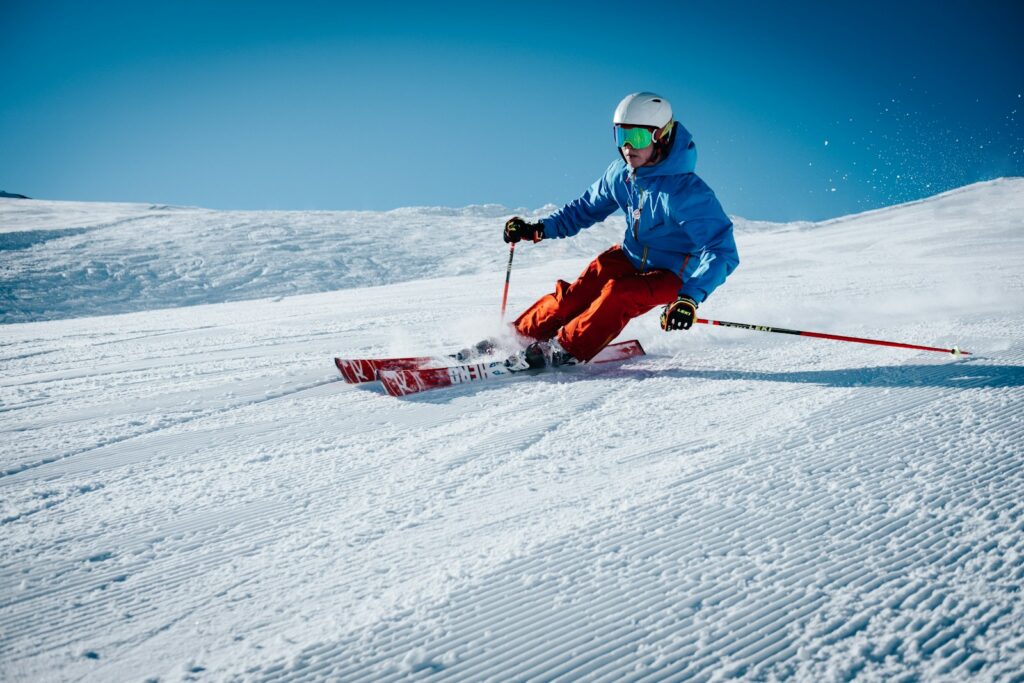
As the snowflakes gently cascade down, transforming the landscape into a winter wonderland, there’s a certain allure that calls to the adventurer in us all.
Nestled within the crisp mountain air lies a powerful secret: skiing is not just a thrilling winter sport, but also an incredible full-body workout.
While many might associate skiing with leisurely holidays or adrenaline-filled descents, it’s time to unveil its true potential as the perfect exercise—one that harmoniously combines fitness, fun, and the great outdoors.
Imagine gliding through powdery trails, your body naturally working in unison to maintain balance, control, and speed. Each swoosh and turn strengthens core muscles, tones legs, and heightens cardiovascular endurance, all while immersing you in breathtaking alpine beauty.
But the benefits of skiing extend beyond physical prowess. In a world where stress seems to be a perpetual companion, skiing offers a sanctuary for mental rejuvenation. There’s something uniquely exhilarating about conquering slopes that transcends the mere physical act—it’s a dance with nature that demands presence and focus.
As you navigate through snowy terrains, sharpens reflexes, and synchronizes mind and body, skiing becomes an active meditation that clears the mind and invigorates the soul.
Whether you’re a seasoned skier or a novice setting out on your first snowy adventure, discover why this winter sport can be more than just an occasional escape—it can transform into the perfect exercise for both body and spirit.
The Science Behind Skiing: How It Engages Every Muscle Group
When you hit the slopes, it’s not just your legs that get a workout. Skiing engages every muscle group in your body, making it a truly comprehensive exercise. From the moment you push off and glide down the mountain, your muscles are working in harmony to maintain balance, control, and speed.
One of the primary muscle groups activated during skiing is your core. As you navigate through turns and twists, your abdominal and back muscles work together to stabilize your body and maintain proper form. This constant engagement of the core not only strengthens these muscles but also improves overall stability and balance.
In addition to your core, skiing also targets your leg muscles. The quadriceps, hamstrings, calves, and glutes all play a crucial role in propelling you forward and controlling your movements on the slopes. With each turn and descent, these muscles are constantly contracting and lengthening, building strength and endurance over time.
Furthermore, skiing is an excellent cardiovascular exercise that gets your heart pumping. As you glide down the mountain at high speeds or tackle challenging terrains, your heart rate increases to meet the demands of your body. This sustained cardiovascular activity helps improve heart health by strengthening the heart muscle and increasing its efficiency.
It’s worth noting that skiing also engages smaller muscle groups that are often overlooked in traditional workouts. Your arms and shoulders work to maintain balance while using poles for propulsion. Even your feet and ankles play a role in maintaining stability as you navigate uneven terrain.
In summary, skiing is a full-body workout that engages every major muscle group while providing an exhilarating experience on the slopes. Whether you’re carving through fresh powder or perfecting your technique on groomed trails, this winter sport offers a unique opportunity to strengthen both body and mind.
Skiing as Cardio: Boosting Heart Health on the Slopes
When it comes to cardiovascular exercise, skiing is a fantastic option that combines fun and fitness. As you glide down the slopes, your heart rate increases, and your cardiovascular system gets a significant workout.
One of the reasons skiing is such an effective cardio exercise is the combination of endurance and intensity. Whether you’re tackling long runs or opting for shorter bursts of speed, skiing requires sustained effort over an extended period. This continuous activity helps improve cardiovascular endurance by strengthening the heart and lungs.
Additionally, skiing involves both aerobic and anaerobic exercise. Aerobic exercise refers to activities that require oxygen to meet energy demands over an extended period. As you ski, your body relies on oxygen to fuel your muscles throughout each run. This aerobic component helps improve lung capacity and overall respiratory function.
On the other hand, anaerobic exercise involves short bursts of intense activity without relying on oxygen for energy production. Skiing incorporates these anaerobic elements during quick turns, jumps, or challenging terrains. These bursts of high-intensity activity help improve overall power and explosiveness.
Furthermore, skiing provides a low-impact workout that is gentle on the joints compared to other high-intensity exercises like running or jumping. The smooth gliding motion reduces stress on your knees and ankles while still providing an effective cardiovascular workout.
So next time you hit the slopes, remember that you’re not just having fun—you’re also boosting your heart health and improving your overall fitness levels.
Mental Benefits of Skiing: Stress Relief and Mindfulness in Motion
Skiing isn’t just about physical fitness—it also offers numerous mental benefits that can enhance your overall well-being. In today’s fast-paced world, finding moments of peace and tranquility is essential, and skiing provides the perfect escape.
One of the most significant mental benefits of skiing is stress relief. As you glide down the mountain, surrounded by breathtaking alpine beauty, your mind naturally shifts away from daily worries and stressors. The combination of fresh air, natural scenery, and physical activity releases endorphins in your brain, promoting feelings of happiness and relaxation.
Skiing also offers a unique opportunity for mindfulness in motion. To navigate through snowy terrains successfully, you need to be fully present in the moment. Your mind becomes focused on each turn, each movement, and each breath.
This active meditation clears your mind of distractions and allows you to experience a state of flow—a state where time seems to stand still as you become one with the mountain.
Moreover, skiing can boost your self-confidence and improve your mental resilience. Conquering challenging slopes or mastering new techniques gives you a sense of accomplishment that carries over into other areas of life. It teaches you that with practice and determination, you can overcome obstacles and achieve your goals.
Whether you’re a seasoned skier or a beginner taking their first turns on the snow, skiing offers a holistic experience that nurtures both body and mind. So next time you hit the slopes, embrace the mental benefits this winter sport has to offer.